What is Ruqyah in Islam? Meaning, Evidence & How It Works

What is ruqyah? Ruqyah in Islam is the recitation of the Quran, the names and attributes of Allah, and authentic prophetic supplications over a person, seeking protection and healing from Allah. It is a well-established Sunnah practice used against the evil eye, envy (hasad), black magic (sihr), and the harm of the jinn, as well as for general illness and spiritual well-being. At Ad-Dua Ruqyah Center, with over 6 years of experience since 2020, we provide fully Sharia-compliant, shirk-free ruqyah for clients in the USA, UK, and worldwide. This guide explains the meaning of ruqyah, its evidence in the Quran and Sunnah, its types, and how it is performed.

Key point — healing belongs to Allah alone. Ruqyah is a Sunnah means of seeking cure and protection; it works only by the permission of Allah, never by itself, and never through amulets, sorcery, or shirk.

Ruqyah Meaning: How to Define Ruqyah

To define ruqyah simply: the word “ruqyah” (رقية) linguistically refers to an incantation or a recitation said over someone seeking a cure. In Islamic terms, ruqyah meaning is refined to a specific, lawful practice — reciting Quranic verses, the beautiful names of Allah, and the supplications taught by the Prophet Muhammad ﷺ, then seeking Allah’s protection and cure. So ruqyah in Islam is not a magic spell; it is worship and supplication directed to Allah alone.

Is Ruqyah Mentioned in the Quran?

A common question is: is ruqyah mentioned in the Quran? The specific word “ruqyah” as a term appears in the authentic hadith rather than as a Quranic word. However, the foundation of ruqyah is firmly rooted in the Quran, because Allah describes the Quran itself as a healing:

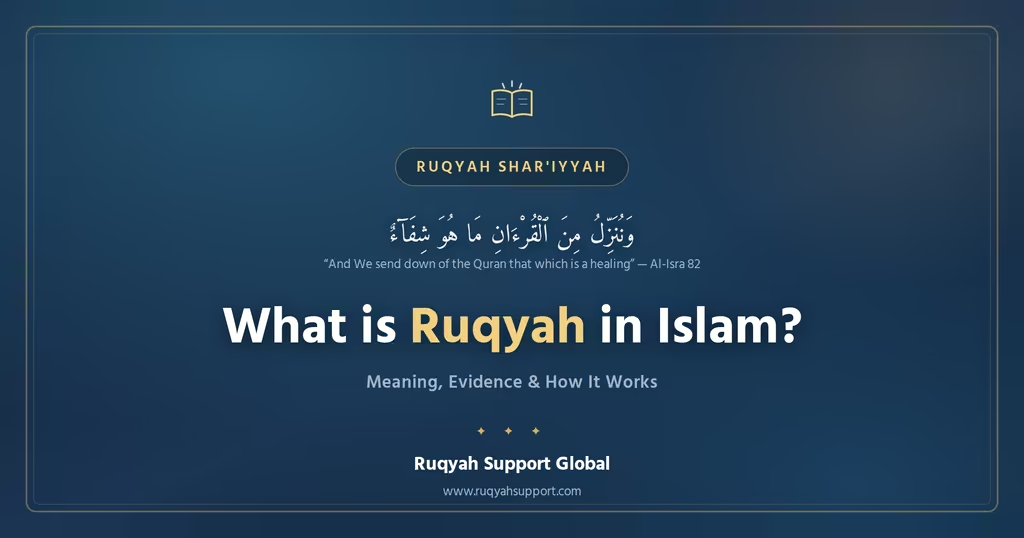
“And We send down of the Quran that which is a healing and a mercy for the believers.” (Surah Al-Isra 17:82)

“…a healing for what is in the breasts…” (Surah Yunus 10:57)

The Quran also mentions seeking refuge from evil in Surah Al-Falaq and Surah An-Nas, which are central to ruqyah. So while the term is prophetic, the practice of ruqyah islam is built directly on the Quran.

Evidence of Ruqyah in the Sunnah

Understanding what is ruqyah requires looking at the Sunnah, where it is clearly established:

  • The Angel Jibreel performed ruqyah on the Prophet ﷺ, saying: “In the name of Allah I perform ruqyah for you, from everything that harms you…” (Sahih Muslim).
  • A companion recited Surah Al-Fatihah over a man who had been stung, and he recovered; the Prophet ﷺ approved it and even smiled (Sahih Bukhari).
  • The Prophet ﷺ would recite Surah Al-Ikhlas, Al-Falaq, and An-Nas, blow into his hands, and wipe over his body before sleep (Sahih Bukhari).
  • The Prophet ﷺ taught: “There is no harm in ruqyah as long as it contains no shirk.” (Sahih Muslim).

The Two Types of Ruqyah

When learning what is ruqyah, it is essential to know its two types:

  • Ruqyah Shar’iyyah (lawful): based on the Quran, the names of Allah, and authentic Sunnah supplications, in a language whose meaning is understood, with the firm belief that it works only by Allah’s permission.
  • Ruqyah Shirkiyyah (forbidden): involving jinn, amulets, unknown/incomprehensible words, sorcery, or seeking help from other than Allah. This is completely prohibited (haram).

A Muslim must only ever use ruqyah shar’iyyah and must avoid sorcerers (“kabiraj”), fortune-tellers, and amulet-makers entirely.

What is Ruqyah Used For?

Ruqyah in Islam is commonly used for:

  • The evil eye (al-‘ayn) and envy (hasad).
  • Black magic (sihr) and its effects.
  • The harm and possession of the jinn.
  • General physical and spiritual illness (alongside medical treatment).
  • Daily protection through the morning and evening adhkar.

Importantly, ruqyah is a complement to — never a replacement for — proper medical and psychological care. Islam encourages seeking medical treatment as well.

Conditions of Valid Ruqyah

Scholars mention three conditions for authentic ruqyah, which help define ruqyah correctly:

  • It must use the words of Allah (Quran), His names, or His attributes.
  • It must be in Arabic or in a language whose meaning is understood — never vague or unknown words.
  • One must firmly believe ruqyah does not work by itself, but only by the decree and permission of Allah.

How is Ruqyah Performed?

A simple, authentic method of ruqyah:

  1. Begin with sincerity (ikhlas) and certainty (yaqin) that Allah alone is the Healer.
  2. Recite Surah Al-Fatihah, Ayatul Kursi, the last two verses of Surah Al-Baqarah, and the three Quls (Ikhlas, Falaq, Nas).
  3. Add the prophetic supplications, such as “Allahumma Rabban-nas, adhhibil-ba’s, ishfi antash-Shafi…”.
  4. Blow lightly into your hands and wipe over your body, or blow over water and olive oil to drink and apply.
  5. Performing ruqyah on yourself is best; a trusted, shirk-free raqi can help for complex cases.

Frequently Asked Questions (FAQ)

What is ruqyah in simple terms?

Ruqyah is reciting the Quran and authentic prophetic supplications over a person to seek healing and protection from Allah, by His permission.

What does the word ruqyah mean?

Linguistically it means an incantation or recitation for seeking cure; in Islam it refers specifically to lawful recitation of the Quran, Allah’s names, and Sunnah duas.

Is ruqyah mentioned in the Quran?

The term appears in the hadith, but its foundation is Quranic — the Quran calls itself a healing (Surah Al-Isra 82, Yunus 57), and Surah Al-Fatihah was used as ruqyah in the Sunnah.

Can I perform ruqyah on myself?

Yes, and self-ruqyah is the best. Reciting over yourself daily, especially the three Quls before sleep, is a beautiful Sunnah.

Is ruqyah a replacement for medicine?

No. Ruqyah is a spiritual means alongside proper medical care. Healing comes only from Allah; the raqi and the doctor are both only guides.

Learn More

To go deeper, see our guides on the signs of the evil eye and sihr and our Ruqyah Service page. For the primary sources, you may read Surah Al-Isra 17:82 and the ruqyah hadith in Sahih Muslim.

🔍 DIAGNOSIS

Why a Ruqyah Diagnosis With a Raqi Is Best

Whether a problem is caused by the evil eye, sihr, or the jinn is not always easy to tell, and each needs a slightly different approach. An experienced raqi analyses the symptoms and the response to ruqyah to identify the real cause and treats it with an authentic, shirk-free method. Self-ruqyah is excellent, but for complex cases a proper diagnosis is the safest path.

Accurate identification: pinpointing the real underlying issue.
Targeted recitation: the right verses and duas for the problem.
Shirk-free approach: entirely Quran- and Sunnah-based.
Ongoing follow-up: guidance until recovery, by Allah’s will.

📅 BOOK ONLINE

Book Your Online Ruqyah Session Today

Serving clients in the 🌍 USA, UK, Europe and worldwide via secure online WhatsApp sessions. Over 6 years of experience since 2020, with an authentic Quran- and Sunnah-based approach.

✨ We care, Allah cure.

✍️ Written by:
Raqi Muhammad Hasan
Director, Ad-Dua Ruqyah Center, Dhaka
Admin, Ruqyah Support Global
Providing authentic Quran- and Sunnah-based ruqyah and hijama services with over 6 years of experience since 2020.

📌 Note: Healing comes only from Allah. Ruqyah is a spiritual means and the raqi is only a guide — it is not a replacement for medical or psychological treatment. Always choose authentic, shirk-free ruqyah and avoid sorcerers and amulets. For any physical or mental health condition, please also consult a qualified doctor.
What is Ruqyah in Islam - meaning, evidence and how ruqyah works

What is Ruqyah in Islam? Meaning, Evidence & How It Works

What is ruqyah? Ruqyah in Islam is the recitation of the Quran, the names and attributes of Allah, and authentic prophetic supplications over a person, seeking protection and healing from Allah. It is a well-established Sunnah practice used against the evil eye, envy (hasad), black magic (sihr), and the harm of the jinn, as well as for general illness and spiritual well-being. At Ad-Dua Ruqyah Center, with over 6 years of experience since 2020, we provide fully Sharia-compliant, shirk-free ruqyah for clients in the USA, UK, and worldwide. This guide explains the meaning of ruqyah, its evidence in the Quran and Sunnah, its types, and how it is performed.
Key point — healing belongs to Allah alone. Ruqyah is a Sunnah means of seeking cure and protection; it works only by the permission of Allah, never by itself, and never through amulets, sorcery, or shirk.

Ruqyah Meaning: How to Define Ruqyah

To define ruqyah simply: the word “ruqyah” (رقية) linguistically refers to an incantation or a recitation said over someone seeking a cure. In Islamic terms, ruqyah meaning is refined to a specific, lawful practice — reciting Quranic verses, the beautiful names of Allah, and the supplications taught by the Prophet Muhammad ﷺ, then seeking Allah’s protection and cure. So ruqyah in Islam is not a magic spell; it is worship and supplication directed to Allah alone.

Is Ruqyah Mentioned in the Quran?

A common question is: is ruqyah mentioned in the Quran? The specific word “ruqyah” as a term appears in the authentic hadith rather than as a Quranic word. However, the foundation of ruqyah is firmly rooted in the Quran, because Allah describes the Quran itself as a healing:
“And We send down of the Quran that which is a healing and a mercy for the believers.” (Surah Al-Isra 17:82)
“…a healing for what is in the breasts…” (Surah Yunus 10:57)
The Quran also mentions seeking refuge from evil in Surah Al-Falaq and Surah An-Nas, which are central to ruqyah. So while the term is prophetic, the practice of ruqyah islam is built directly on the Quran.

Evidence of Ruqyah in the Sunnah

Understanding what is ruqyah requires looking at the Sunnah, where it is clearly established:
  • The Angel Jibreel performed ruqyah on the Prophet ﷺ, saying: “In the name of Allah I perform ruqyah for you, from everything that harms you…” (Sahih Muslim).
  • A companion recited Surah Al-Fatihah over a man who had been stung, and he recovered; the Prophet ﷺ approved it and even smiled (Sahih Bukhari).
  • The Prophet ﷺ would recite Surah Al-Ikhlas, Al-Falaq, and An-Nas, blow into his hands, and wipe over his body before sleep (Sahih Bukhari).
  • The Prophet ﷺ taught: “There is no harm in ruqyah as long as it contains no shirk.” (Sahih Muslim).

The Two Types of Ruqyah

When learning what is ruqyah, it is essential to know its two types:
  • Ruqyah Shar’iyyah (lawful): based on the Quran, the names of Allah, and authentic Sunnah supplications, in a language whose meaning is understood, with the firm belief that it works only by Allah’s permission.
  • Ruqyah Shirkiyyah (forbidden): involving jinn, amulets, unknown/incomprehensible words, sorcery, or seeking help from other than Allah. This is completely prohibited (haram).
A Muslim must only ever use ruqyah shar’iyyah and must avoid sorcerers (“kabiraj”), fortune-tellers, and amulet-makers entirely.

What is Ruqyah Used For?

Ruqyah in Islam is commonly used for:
  • The evil eye (al-‘ayn) and envy (hasad).
  • Black magic (sihr) and its effects.
  • The harm and possession of the jinn.
  • General physical and spiritual illness (alongside medical treatment).
  • Daily protection through the morning and evening adhkar.
Importantly, ruqyah is a complement to — never a replacement for — proper medical and psychological care. Islam encourages seeking medical treatment as well.

Conditions of Valid Ruqyah

Scholars mention three conditions for authentic ruqyah, which help define ruqyah correctly:
  • It must use the words of Allah (Quran), His names, or His attributes.
  • It must be in Arabic or in a language whose meaning is understood — never vague or unknown words.
  • One must firmly believe ruqyah does not work by itself, but only by the decree and permission of Allah.

How is Ruqyah Performed?

A simple, authentic method of ruqyah:
  1. Begin with sincerity (ikhlas) and certainty (yaqin) that Allah alone is the Healer.
  2. Recite Surah Al-Fatihah, Ayatul Kursi, the last two verses of Surah Al-Baqarah, and the three Quls (Ikhlas, Falaq, Nas).
  3. Add the prophetic supplications, such as “Allahumma Rabban-nas, adhhibil-ba’s, ishfi antash-Shafi…”.
  4. Blow lightly into your hands and wipe over your body, or blow over water and olive oil to drink and apply.
  5. Performing ruqyah on yourself is best; a trusted, shirk-free raqi can help for complex cases.

Frequently Asked Questions (FAQ)

What is ruqyah in simple terms?

Ruqyah is reciting the Quran and authentic prophetic supplications over a person to seek healing and protection from Allah, by His permission.

What does the word ruqyah mean?

Linguistically it means an incantation or recitation for seeking cure; in Islam it refers specifically to lawful recitation of the Quran, Allah’s names, and Sunnah duas.

Is ruqyah mentioned in the Quran?

The term appears in the hadith, but its foundation is Quranic — the Quran calls itself a healing (Surah Al-Isra 82, Yunus 57), and Surah Al-Fatihah was used as ruqyah in the Sunnah.

Can I perform ruqyah on myself?

Yes, and self-ruqyah is the best. Reciting over yourself daily, especially the three Quls before sleep, is a beautiful Sunnah.

Is ruqyah a replacement for medicine?

No. Ruqyah is a spiritual means alongside proper medical care. Healing comes only from Allah; the raqi and the doctor are both only guides.

Learn More

To go deeper, see our guides on the signs of the evil eye and sihr and our Ruqyah Service page. For the primary sources, you may read Surah Al-Isra 17:82 and the ruqyah hadith in Sahih Muslim.
🔍 DIAGNOSIS

Why a Ruqyah Diagnosis With a Raqi Is Best

Whether a problem is caused by the evil eye, sihr, or the jinn is not always easy to tell, and each needs a slightly different approach. An experienced raqi analyses the symptoms and the response to ruqyah to identify the real cause and treats it with an authentic, shirk-free method. Self-ruqyah is excellent, but for complex cases a proper diagnosis is the safest path.

Accurate identification: pinpointing the real underlying issue. ✅ Targeted recitation: the right verses and duas for the problem. ✅ Shirk-free approach: entirely Quran- and Sunnah-based. ✅ Ongoing follow-up: guidance until recovery, by Allah’s will.
📅 BOOK ONLINE

Book Your Online Ruqyah Session Today

Serving clients in the 🌍 USA, UK, Europe and worldwide via secure online WhatsApp sessions. Over 6 years of experience since 2020, with an authentic Quran- and Sunnah-based approach.

✨ We care, Allah cure.

✍️ Written by: Raqi Muhammad Hasan Director, Ad-Dua Ruqyah Center, Dhaka Admin, Ruqyah Support Global Providing authentic Quran- and Sunnah-based ruqyah and hijama services with over 6 years of experience since 2020.

📌 Note: Healing comes only from Allah. Ruqyah is a spiritual means and the raqi is only a guide — it is not a replacement for medical or psychological treatment. Always choose authentic, shirk-free ruqyah and avoid sorcerers and amulets. For any physical or mental health condition, please also consult a qualified doctor.